

By: Abdullahi Inuwa
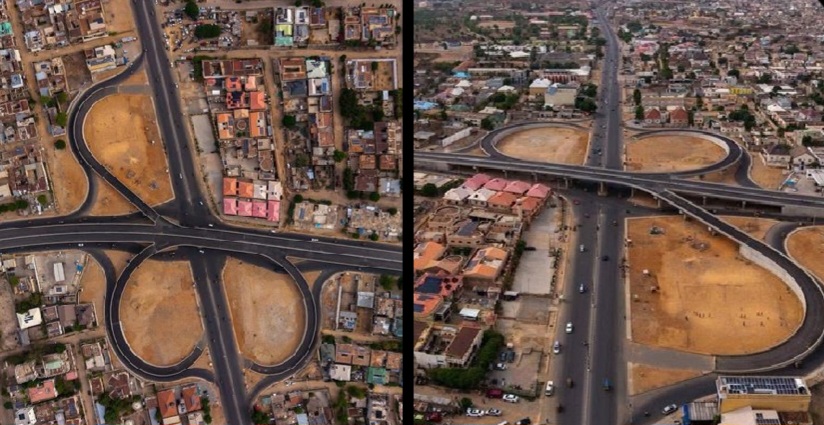
The Kano State Government has recorded another major milestone in its infrastructure drive with the successful completion of the Tal’Udu Interchange Bridge, one of two landmark bridge projects delivered under the administration of Governor Abba Kabir Yusuf.
The project, which stands as a symbol of urban renewal and engineering ambition, is already being described as one of the most significant transportation upgrades within the Kano metropolitan area in recent years.
For many residents unfamiliar with the Tal’Udu axis, the full significance of the achievement may not be immediately apparent. However, for those who have long lived and worked in the area, the completion of the interchange represents the resolution of years of traffic congestion, urban strain, and infrastructural limitations that previously defined daily life in the corridor.
The Tal’Udu axis is one of the most densely populated and commercially active zones in Kano metropolis, characterized by tightly packed residential buildings, thriving business outlets, and continuous human and vehicular movement from morning until late night.
For years, commuters and traders navigating the area faced severe traffic bottlenecks, especially during peak hours, with delays that often disrupted economic activities and daily routines. The narrow road network and increasing population pressure made mobility a persistent challenge.
Against this backdrop, the conception and delivery of a modern interchange bridge in such a constrained environment has been widely described as a bold and technically demanding undertaking.
Construction experts note that executing a project of this magnitude within a densely built-up urban setting requires not only engineering precision but also careful coordination with affected communities, relocation planning, and sustained logistical management to minimize disruption.
Despite these challenges, the Yusuf administration pressed ahead with the project, positioning it as part of a broader agenda to modernize Kano’s infrastructure and improve urban mobility across the state.
Governor Abba Kabir Yusuf, since assuming office, has consistently emphasized the importance of infrastructure development as a catalyst for economic growth, improved transportation efficiency, and enhanced quality of life for residents.
The Tal’Udu Interchange Bridge, now completed, is expected to significantly ease traffic congestion in the area by improving traffic flow, reducing travel time, and providing safer and more efficient road connectivity for motorists and pedestrians alike.
For local businesses, the project is also expected to bring long-term economic benefits. Traders and shop owners along the corridor have long endured the difficulties associated with heavy traffic and limited accessibility. With improved road infrastructure, many anticipate increased customer flow and better commercial opportunities.
Transport operators are equally optimistic, noting that reduced congestion will translate into lower fuel consumption, faster trip completion times, and improved service delivery across routes that pass through the axis.
Urban planners and development analysts have also described the bridge as a strategic investment in Kano’s future, particularly as the state continues to expand rapidly in population and economic activity.
They argue that infrastructure projects such as the Tal’Udu Interchange are essential for preventing long-term urban collapse, where unregulated growth overwhelms existing road networks and public utilities.
The successful delivery of the project is also being viewed as a reflection of the administration’s capacity to undertake complex infrastructure works within challenging environments.
Observers say the coordination required to complete the bridge in a congested metropolitan setting underscores a level of planning and execution that could serve as a reference point for future urban projects in the state.
While the project has been largely welcomed, residents are also calling for continued maintenance and complementary infrastructure improvements to ensure that the benefits of the bridge are fully realized over time.
Some stakeholders have urged the government to extend similar interventions to other congested areas within the metropolis, noting that Kano’s rapid urban expansion requires sustained infrastructural investment to keep pace with demand.
Despite these calls, the completion of the Tal’Udu Interchange Bridge remains a major highlight for the administration, marking a visible transformation in one of the city’s busiest corridors.
For commuters who once endured hours of traffic delays, the new bridge represents not just a physical structure, but a practical solution to a long-standing urban challenge.
As traffic begins to flow more smoothly through the newly constructed interchange, many residents see it as a sign of what coordinated planning and sustained investment in infrastructure can achieve.
In the broader context of Kano State’s development agenda, the Tal’Udu Interchange Bridge stands as a testament to the administration’s commitment to easing mobility constraints and laying the foundation for a more connected and economically vibrant metropolis.
With the project now delivered, attention is expected to shift toward its long-term impact on transportation efficiency, urban development, and economic activity across Kano’s growing population centers.
For now, however, the Tal’Udu Interchange Bridge remains a landmark achievement—one that many say will be remembered as a defining feature of Governor Abba Kabir Yusuf’s infrastructure legacy in Kano State.
Abdullahi Inuwa Social Commentator ainuwa303@gmail.com