

By: Abdullahi Inuwa
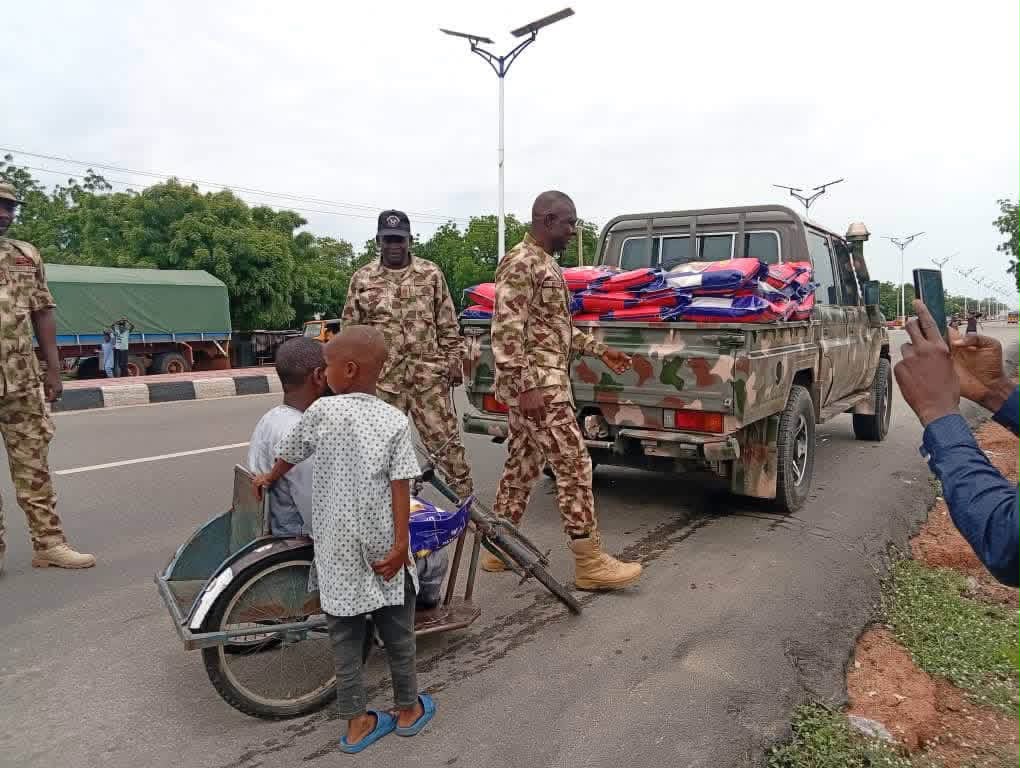
MAIDUGURI — While soldiers are often celebrated for their courage on the battlefield, Colonel Ishaya Manga, a Special Forces commander, is drawing attention for a different kind of bravery — reaching out to vulnerable families and children facing hardship in Maiduguri.
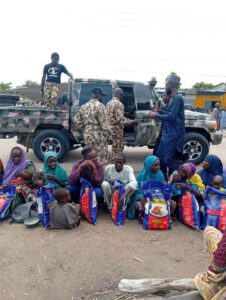
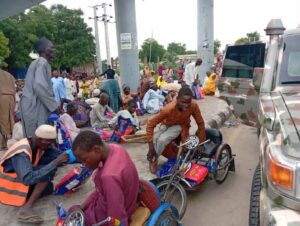
Manga was recently seen moving through parts of the Borno capital, personally extending food and other relief materials to residents struggling with the economic challenges confronting many households.
The intervention has sparked warm reactions among beneficiaries and residents, who described the officer’s gesture as a demonstration of compassion beyond his military responsibilities.
For the families who received the assistance, the moment was more than the arrival of food or relief items. It was a reminder that, even amid the pressures of daily survival, there are people willing to identify with their difficulties and offer support.
The latest outreach is also part of what residents say is becoming a pattern of humanitarian intervention by the Special Forces officer.
Manga had previously supported education among children in the city by providing books, writing materials and other learning items to about 70,000 pupils.
For children from communities affected by years of insecurity and displacement, such assistance carries significance far beyond the monetary value of the materials.
An exercise book, textbook or biro may appear insignificant under normal circumstances. But for a child whose education has been disrupted by conflict and economic hardship, having basic learning materials can mean the difference between staying engaged in school and falling further behind.
Manga’s interventions therefore appear to reflect an understanding that restoring stability in Borno requires more than military victories.
It also requires giving young people the opportunity to learn, supporting vulnerable families and rebuilding the confidence of communities that have endured years of insecurity.
The contrast has been striking.
As a Special Forces commander trained for some of the most difficult security operations, Manga is associated with the demanding responsibilities of protecting lives and confronting threats. Yet, away from operational duties, he has repeatedly been seen engaging with ordinary residents and responding to their immediate needs.
For many beneficiaries, that human connection has become an important part of the story.
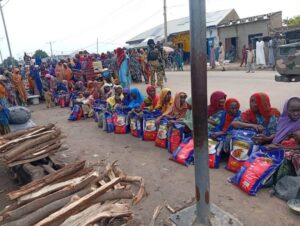
They did not see a military commander arriving with an operational brief. They saw someone who noticed their hardship and chose to help.
And that, perhaps, represents another dimension of leadership.
Military gallantry is traditionally associated with courage under fire — standing firm in dangerous situations, protecting fellow troops and confronting threats to the nation.
But courage can also take a quieter form.
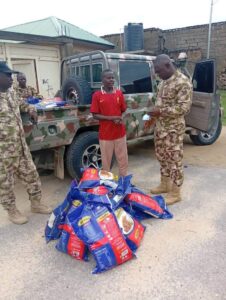
It can mean remembering families who are struggling. It can mean supporting children whose education has been affected by crisis. It can mean giving from personal resources without demanding recognition in return.
That quiet form of service is what Manga’s repeated gestures in Maiduguri have brought into focus.
His actions have also resonated because they connect directly with ordinary people, particularly at a time when the rising cost of living has placed additional pressure on vulnerable households.
Residents who witnessed the latest outreach said it demonstrated that the responsibility of protecting communities can extend beyond security operations to include empathy and concern for the people at the heart of the mission.
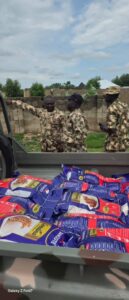
For the beneficiaries, the message was simple: leadership is not always expressed through grand announcements or ceremonies. Sometimes, it is found in a bag of food handed to a struggling family, a writing material placed in a child’s hands, or a commander simply stopping to listen.
In Maiduguri, Colonel Ishaya Manga is increasingly being remembered not only for the uniform he wears, but also for the human touch he brings with it.
Source:@ZagazolaMakama