

By Musa Abdullahi Sufi
In the ancient city of Katsina, tradition did not merely unfold, it roared to life. Beneath the Sahelian sun, the 2026 Sallah Festival Fiesta transformed the historic Kofar Soro into a theatre of heritage, power, and global attention, as thousands gathered to witness one of West Africa’s most iconic cultural spectacles.
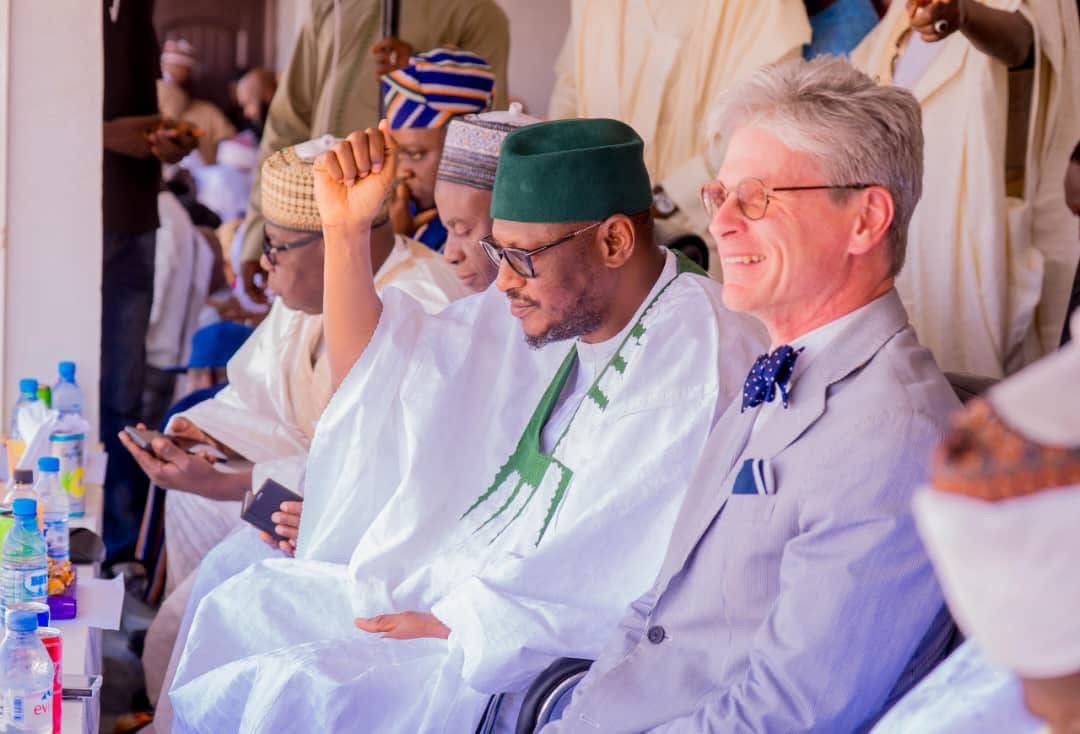
At the heart of this grandeur stood Katsina state Governor, Dr. Dikko Umaru Radda, whose presence underscored a renewed political and cultural vision for the state. Alongside him were over 50 district heads from the Katsina Emirate, a formidable assembly of traditional authority, and an extraordinary delegation of 17 international diplomats led by Pieter Leenknegt, a clear signal that Katsina’s cultural renaissance is attracting global interest.
A Festival of Power, Identity, and Motion
From the thunderous charge of horsemen to the hypnotic rhythm of kalangu and algaita drums, the festival was a masterclass in living history. Riders clad in richly embroidered regalia surged through the ancient gates in choreographed precision, evoking centuries of emirate tradition rooted in loyalty, bravery, and royal pageantry.
At the palace, Emir of Katsina, Abdulmumini Kabir Usman received dignitaries and visitors, formally ushering them into the cultural continuum of the emirate ahead of the much-anticipated Hawan Bariki procession. The Emir’s court became a convergence point of heritage and diplomacy, where tradition met modern statecraft.
Diplomacy Meets Culture
The presence of a high-powered diplomatic corps elevated the festival beyond a local celebration into a strategic platform for international engagement. Envoys from Europe, Africa, and Latin America including representatives from Belgium, Egypt, the Netherlands, Spain, Poland, Switzerland, Slovakia, Argentina, and Congo joined development actors and global institutional leaders to witness the Durbar in Katsina and Daura Emirates.
Their arrival through the Umaru Musa Yar’adua International Airport, where they were received by Governor Radda and his deputy, marked the beginning of a cultural diplomacy tour designed to deepen partnerships and reposition Katsina as a destination for heritage tourism and investment.
Speaking on the significance of the visit, Governor Radda emphasized the strategic value of culture in diplomacy:
“We are honoured to receive this distinguished delegation. The Durbar is not only a celebration of tradition but a powerful symbol of unity, peace, and the enduring identity of our people.”
Behind the Spectacle: Community, Craft, and Security
Beyond the spectacle lies a deeply rooted ecosystem sustaining the Durbar tradition. Artisans meticulously crafted regalia that reflected generational skill and symbolism. Youth participants, trained in horsemanship and discipline, demonstrated how culture can serve as a tool for empowerment and continuity.
Equally critical were the coordinated security efforts, community-led and state-supported that ensured a peaceful and seamless celebration. In a region often mischaracterized by its challenges, Katsina projected a compelling counter-narrative: one of order, pride, and collective responsibility.
Culture as Economic Strategy
What unfolded in Katsina is more than festivity, it is policy in motion. The deliberate integration of cultural preservation with tourism development and international diplomacy reflects a broader governance strategy under Governor Radda. By leveraging the Durbar as both a cultural asset and an economic driver, the state is positioning itself within the global cultural tourism map.
The inclusion of global stakeholders such as the United Nations Resident Coordinator and international private sector leaders signals growing confidence in Katsina’s potential as a hub for partnerships, investment, and innovation rooted in heritage.
A Living Legacy, A Global Future
As the sun set over Katsina and anticipation built for the grand Durbar finale at the Old Government House, one reality became unmistakable: this was not just a festival, it was a statement.
A statement that culture remains a powerful currency in global engagement. A statement that heritage, when preserved and projected strategically, can drive development. And a statement that Katsina is not only safeguarding its past, but actively shaping its future on the world stage.
In the rhythmic gallop of horses and the echoes of ancestral drums, Katsina told its story; boldly, proudly, and now, globally.
End.