

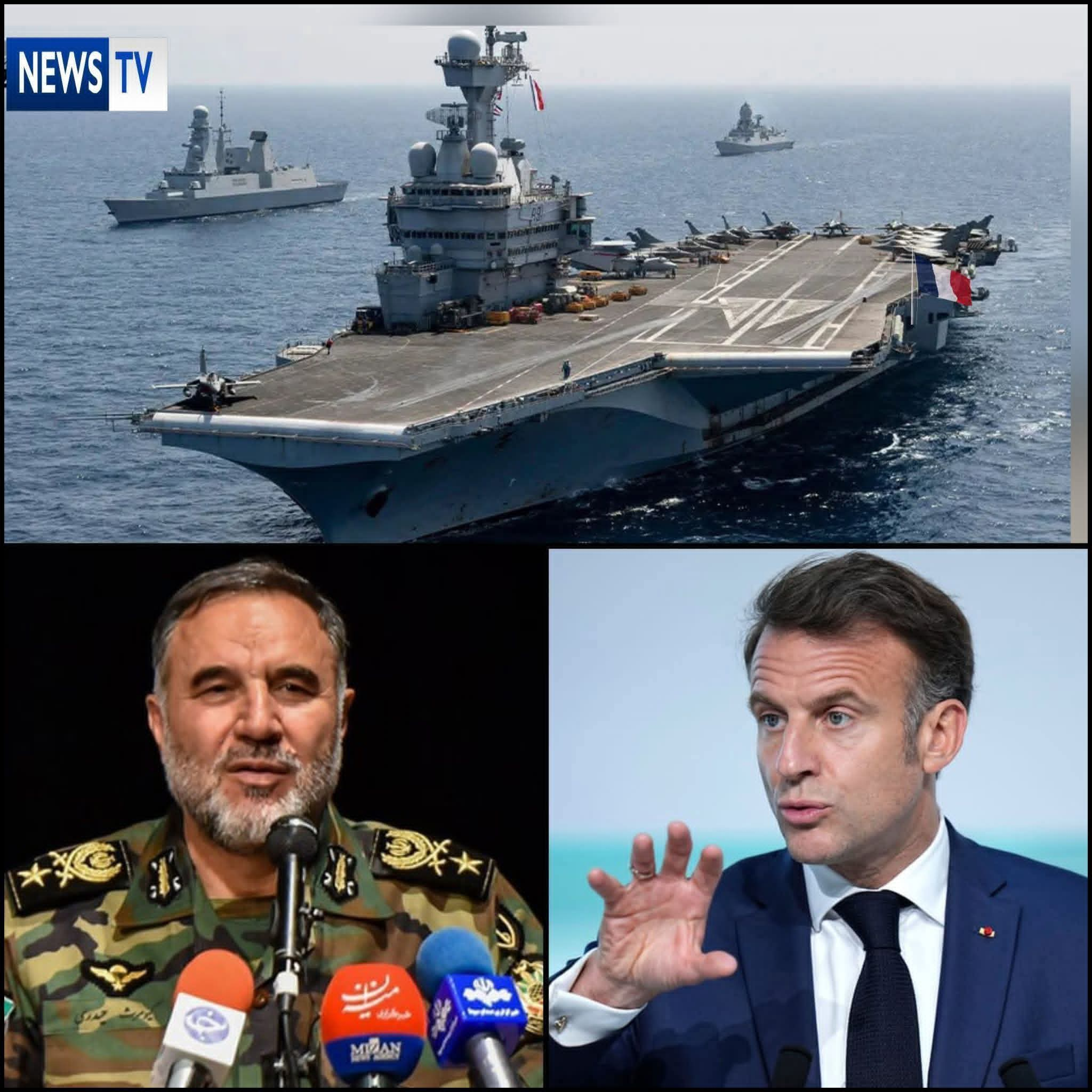
Fresh geopolitical tensions have surfaced around the strategic shipping lanes of the Middle East after the President of Emmanuel Macron announced plans to strengthen naval deployments to ensure the safe passage of oil tankers through the vital Strait of Hormuz.
Speaking amid growing concerns over disruptions to global energy supplies, the French leader said Paris would bolster its maritime presence with destroyers and aircraft carriers to safeguard commercial vessels navigating the narrow waterway linking the Persian Gulf to the global market.
“We will reinforce the sea with destroyers and aircraft carriers to allow oil tankers to pass through the Strait of Hormuz,” Macron stated, underscoring the importance of keeping one of the world’s most critical energy corridors open.
The Strait of Hormuz handles a significant portion of global oil shipments, making any threat to its security a major concern for international markets and shipping companies.
However, the announcement quickly drew a sharp reaction from Ali Larijani, the national security adviser to Ali Khamenei, who accused Western powers of hypocrisy regarding maritime security in the region.
Larijani argued that Western naval forces had already gathered extensive fleets near Yemen without resolving shipping restrictions elsewhere.
“You have amassed the ships of twenty countries off the coast of Yemen at the Bab el‑Mandeb Strait so that ships can pass to Israel, yet you have failed to allow a single ship to enter for two years,” Larijani said in a strongly worded response.
He further claimed that vessels attempting to pass through under Western protection had been attacked, suggesting that the military build-up had not effectively secured the route.
“Those that attempted to pass through under your protection were sunk. We know your forces very well,” he added.
The remarks highlight deepening divisions over control of key maritime chokepoints in the Middle East, particularly the Bab el‑Mandeb Strait and the Strait of Hormuz — two waterways critical to global trade and energy transportation.
The Bab el‑Mandeb Strait, located between Yemen and the Horn of Africa, connects the Red Sea to the Gulf of Aden and has become a flashpoint in recent months amid heightened tensions involving regional militias and international naval coalitions.
Security analysts warn that increased military deployments by major powers could either deter attacks on commercial shipping or risk escalating confrontations in already volatile waters.
Global energy markets are watching developments closely, as any disruption in tanker traffic through the Strait of Hormuz could trigger sharp spikes in oil prices and disrupt supply chains across Europe, Asia, and beyond.
Diplomatic observers say the exchange between Paris and Tehran reflects the broader geopolitical rivalry shaping maritime security in the Middle East, with international powers seeking to protect strategic trade routes while regional actors challenge their presence.
As tensions simmer, the world’s most important oil corridors remain under intense scrutiny, with the balance between deterrence and escalation hanging delicately over the busy waterways.