

Originally a chess term referring to the final phase of a match, when only a few pieces remain on the board, it is now commonly used in politics, business and popular culture to describe the decisive moments before an objective is achieved. It is the concluding stage of an extended process, event or negotiation. Endgame, that is!
The war that the two nuclear powers, America and Israel, imposed on Iran, codenamed “Operation Epic Fury”, we were told, meant to achieve four objectives: regime change, halt Iran’s nuclear programme, cripple its missile production capability and degrade its uranium enrichment capacity. Then, as the icing on the cake, they added another demand: “unconditional surrender”. They believed they were on their way to victory. Why not, when they thought they had decapitated the country’s leadership and eliminated those they considered central to its system?
But today, America, led by President Donald Trump, who fancies himself the prefect of the world, has shifted the war’s objective to the “re-opening of the Strait of Hormuz”. Incidentally, the strait was open before this war of choice was imposed.
Regime change could not happen because Iran, as we always say, is not Venezuela, where you remove one person, and everyone else falls into line for fear of their lives. In Iran, the highest honour is to be martyred. To them, martyrdom is the mission, not the worst-case scenario. It is, therefore, a badge of honour to be on a hit list.
The Iranian Revolution has taken root far deeper than the West imagined. Those born after the Revolution now occupy every layer of the system. They are at the heart of every sector of Iranian society. Their parents led the Revolution, while their grandparents sowed its seeds.
These people are highly educated across virtually every field. Their women are even more educated. The West thought it was dealing merely with “mullahs”, and it did so with derision. It assumed it was “modern” while the mullahs belonged to the Stone Age. It has now come to the bitter realisation that those same mullahs are miles ahead in intelligence, knowledge, technology, medicine, science and diplomacy. They also understand the art of the deal. Iran has invested heavily in STEM, hence its impressive capabilities and capacities.
Removing one person, or even several, from any sector in Iran is therefore unlikely to shake the system. Those who step into their shoes inherit not only the knowledge of those they replace but also bring their own expertise. That makes them even more formidable and more resolute.
The allegation that Iran is producing nuclear weapons has persisted for more than 40 years, with Israel’s Benjamin Netanyahu repeatedly claiming that the country was only “a couple of weeks” away from acquiring one. It mirrors the allegations about Weapons of Mass Destruction (WMD) that were levelled against Saddam Hussein’s Iraq. Now, the focus has shifted to claims of chemical weapons. If they want to destroy you, they first lie about you and demonise you. And do so without shame.
But if this entire brouhaha is genuinely about nuclear weapons, why is Trump eager to help Saudi Arabia build a nuclear programme? Ironically, he appears to be assuming the role of the approving authority, bypassing the International Atomic Energy Agency (IAEA). Granted, it is said to be for peaceful purposes, but so, too, is Iran’s programme. What gives America, least of all Trump, the authority to decide which countries may pursue nuclear power?
This war is not really about any nuclear threat from Iran. No. Its primary objective is regime change. But why are they so desperate for regime change that they are manufacturing excuses to wage war on Iran?
First is Iran’s unwavering support for the beleaguered people of Palestine, Gaza and Lebanon. Then comes the mother of all reasons: Iran is the gatekeeper standing in the way of the Greater Israel project. The Gulf states, for the most part, have been subsumed into that project. They have become, in effect, vassal states forming Israel’s first line of defence. And, of course, there is the lure of Iranian oil.
Iran knows this. America knows that Iran knows. Israel also knows that Iran knows. And Iran knows that they know it knows.
For that reason, all sides have spent years conducting military exercises, running different war scenarios and refining their strategies based on the outcomes.
From its own assessments, Iran concluded that it could never achieve the desired military advantage over Israel as long as Israel’s forward line of defence — Kuwait, Bahrain, Qatar, the UAE and, to some extent, Oman — continued to host American bases capable of intercepting Iranian missile attacks. Behind them stood Saudi Arabia, with Jordan bringing up the rear, together forming a layered defensive umbrella protecting Israel. Call it an “Arab Wall” protecting Israel and distributing the risks among themselves.
For 20 years, America’s CENTCOM has turned Arab countries into a dome protecting Israel, unacknowledged, unthanked by the beneficiary.
Iran also concluded from its war games that the United States could not sustain a prolonged war against it without relying on those bases in the Arab states. In Iran’s view, these states, including Saudi Arabia, were created by Western powers to serve Israel’s strategic interests. Those bases are the eyes, ears and brains of any American military operation in the region. America is essentially there to protect Israel, itself another creation of the Western powers. Any successful ground assault on Iran would depend heavily on those installations.
Iran has therefore sought to degrade the military effectiveness of those hubs and shatter the protective umbrella on which Israel has relied so heavily. In doing so, it has created a direct face-me-I-face-you corridor between itself and Israel. All the actors in the conflict understand this reality.
Israel, with active American backing, has also degraded HizbulLah, the Houthis in Yemen and Hamas—or so it believes. But the Axis of Resistance, led by Iran, has a habit of concealing its true strength before surprising its adversaries. Call it taqiyya, or whatever you choose; the lesson is simple: underestimate them at your own peril.
Iran saw through America’s recent attack strategy – and endgame. It concluded that the US’ attacks on its southern region were intended to isolate that part of the country from the rest, laying the groundwork for a future ground invasion from the south and another from the west through Kurdistan along the Iraqi border. But now, according to this assessment, the launchpads in Kuwait and Bahrain are no longer available. And in doing so, drove the Americans to the point of exhaustion.
It is a straightforward war game whose dynamics all the players understand. And the Persians, it would seem, are masters of it.
To be continued.
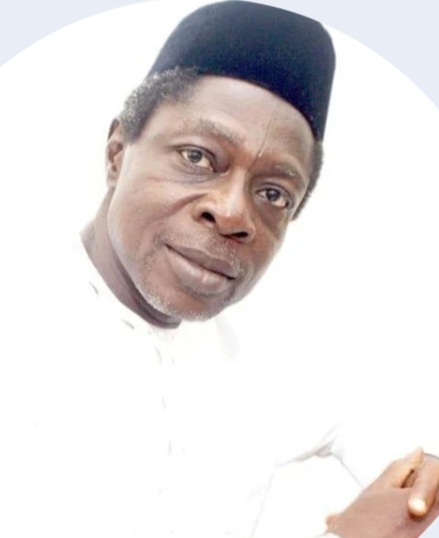
Hassan Gimba, ANIPR, is the Publisher and CEO of Neptune Prime.
My dear Publisher/Editor-in-Chief, sorry for being late.
I’ve included my entry for this week below.
US-Israeli War on Iran (1): The Endgame, by Hassan Gimba
Endgame. A seven-letter word that sounds like the last beat of a drum in a musical piece. Endgame! A word that conjures the image of two Goliaths strutting about, intent on choking the life out of a David. Yet, in this instance, David appears to have pinned the Goliaths to the wall. Endgame! A word with two seemingly contradictory meanings: a game and an end. A loaded word that promises a finale, the fulfilment of an ultimate goal or the culmination of a long-term plan.
Originally a chess term referring to the final phase of a match, when only a few pieces remain on the board, it is now commonly used in politics, business and popular culture to describe the decisive moments before an objective is achieved. It is the concluding stage of an extended process, event or negotiation. Endgame, that is!
The war that the two nuclear powers, America and Israel, imposed on Iran, codenamed “Operation Epic Fury”, we were told, meant to achieve four objectives: regime change, halt Iran’s nuclear programme, cripple its missile production capability and degrade its uranium enrichment capacity. Then, as the icing on the cake, they added another demand: “unconditional surrender”. They believed they were on their way to victory. Why not, when they thought they had decapitated the country’s leadership and eliminated those they considered central to its system?
But today, America, led by President Donald Trump, who fancies himself the prefect of the world, has shifted the war’s objective to the “re-opening of the Strait of Hormuz”. Incidentally, the strait was open before this war of choice was imposed.
Regime change could not happen because Iran, as we always say, is not Venezuela, where you remove one person, and everyone else falls into line for fear of their lives. In Iran, the highest honour is to be martyred. To them, martyrdom is the mission, not the worst-case scenario. It is, therefore, a badge of honour to be on a hit list.
The Iranian Revolution has taken root far deeper than the West imagined. Those born after the Revolution now occupy every layer of the system. They are at the heart of every sector of Iranian society. Their parents led the Revolution, while their grandparents sowed its seeds.
These people are highly educated across virtually every field. Their women are even more educated. The West thought it was dealing merely with “mullahs”, and it did so with derision. It assumed it was “modern” while the mullahs belonged to the Stone Age. It has now come to the bitter realisation that those same mullahs are miles ahead in intelligence, knowledge, technology, medicine, science and diplomacy. They also understand the art of the deal. Iran has invested heavily in STEM, hence its impressive capabilities and capacities.
Removing one person, or even several, from any sector in Iran is therefore unlikely to shake the system. Those who step into their shoes inherit not only the knowledge of those they replace but also bring their own expertise. That makes them even more formidable and more resolute.
The allegation that Iran is producing nuclear weapons has persisted for more than 40 years, with Israel’s Benjamin Netanyahu repeatedly claiming that the country was only “a couple of weeks” away from acquiring one. It mirrors the allegations about Weapons of Mass Destruction (WMD) that were levelled against Saddam Hussein’s Iraq. Now, the focus has shifted to claims of chemical weapons. If they want to destroy you, they first lie about you and demonise you. And do so without shame.
But if this entire brouhaha is genuinely about nuclear weapons, why is Trump eager to help Saudi Arabia build a nuclear programme? Ironically, he appears to be assuming the role of the approving authority, bypassing the International Atomic Energy Agency (IAEA). Granted, it is said to be for peaceful purposes, but so, too, is Iran’s programme. What gives America, least of all Trump, the authority to decide which countries may pursue nuclear power?
This war is not really about any nuclear threat from Iran. No. Its primary objective is regime change. But why are they so desperate for regime change that they are manufacturing excuses to wage war on Iran?
First is Iran’s unwavering support for the beleaguered people of Palestine, Gaza and Lebanon. Then comes the mother of all reasons: Iran is the gatekeeper standing in the way of the Greater Israel project. The Gulf states, for the most part, have been subsumed into that project. They have become, in effect, vassal states forming Israel’s first line of defence. And, of course, there is the lure of Iranian oil.
Iran knows this. America knows that Iran knows. Israel also knows that Iran knows. And Iran knows that they know it knows.
For that reason, all sides have spent years conducting military exercises, running different war scenarios and refining their strategies based on the outcomes.
From its own assessments, Iran concluded that it could never achieve the desired military advantage over Israel as long as Israel’s forward line of defence — Kuwait, Bahrain, Qatar, the UAE and, to some extent, Oman — continued to host American bases capable of intercepting Iranian missile attacks. Behind them stood Saudi Arabia, with Jordan bringing up the rear, together forming a layered defensive umbrella protecting Israel. Call it an “Arab Wall” protecting Israel and distributing the risks among themselves.
For 20 years, America’s CENTCOM has turned Arab countries into a dome protecting Israel, unacknowledged, unthanked by the beneficiary.
Iran also concluded from its war games that the United States could not sustain a prolonged war against it without relying on those bases in the Arab states. In Iran’s view, these states, including Saudi Arabia, were created by Western powers to serve Israel’s strategic interests. Those bases are the eyes, ears and brains of any American military operation in the region. America is essentially there to protect Israel, itself another creation of the Western powers. Any successful ground assault on Iran would depend heavily on those installations.
Iran has therefore sought to degrade the military effectiveness of those hubs and shatter the protective umbrella on which Israel has relied so heavily. In doing so, it has created a direct face-me-I-face-you corridor between itself and Israel. All the actors in the conflict understand this reality.
Israel, with active American backing, has also degraded HizbulLah, the Houthis in Yemen and Hamas—or so it believes. But the Axis of Resistance, led by Iran, has a habit of concealing its true strength before surprising its adversaries. Call it taqiyya, or whatever you choose; the lesson is simple: underestimate them at your own peril.
Iran saw through America’s recent attack strategy – and endgame. It concluded that the US’ attacks on its southern region were intended to isolate that part of the country from the rest, laying the groundwork for a future ground invasion from the south and another from the west through Kurdistan along the Iraqi border. But now, according to this assessment, the launchpads in Kuwait and Bahrain are no longer available. And in doing so, drove the Americans to the point of exhaustion.
It is a straightforward war game whose dynamics all the players understand. And the Persians, it would seem, are masters of it.
To be continued.
Hassan Gimba, ANIPR, is the Publisher and CEO of Neptune Prime.