

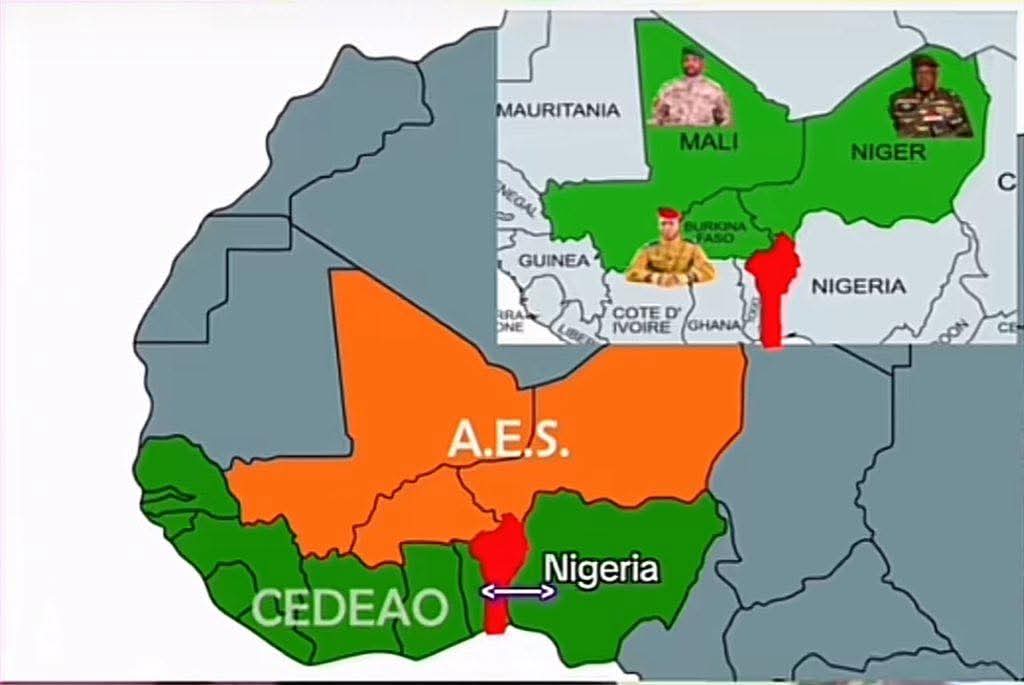
The dust may have settled in Cotonou, but the implications of Benin’s failed military takeover are only just coming into focus. What looked, at first glance, like a brief mutiny now appears to have been a geopolitical earthquake in the making — one that could have redrawn West Africa’s strategic map overnight.
Had the plotters succeeded, ECOWAS would have been split clean down the middle, isolating Nigeria on one side while the remaining member-states consolidated on the other. Analysts say it would have been nothing short of the effective end of ECOWAS as we know it, the final hammer blow to a bloc already rattled by successive coups and the rise of the Alliance of Sahel States (AES).
For Abuja, the stakes were existential. Nigeria, the political anchor of the region, would have found itself hemmed in — cut off from its western flank, surrounded by uncertainty, and forced to re-evaluate both its borders and its influence.
Sources familiar with behind-the-scenes diplomacy say this is precisely why Abuja moved swiftly, quietly coaching Benin’s civilian leadership as tension rose. The message was clear: a successful putsch next door was not just a Beninese crisis — it was a direct threat to Nigerian strategic continuity.
But the biggest geopolitical shockwave would have come from the north. A successful coup in Benin would have delivered the AES what it has long coveted: direct access to the Atlantic Ocean. For the military-led bloc — Mali, Burkina Faso, and Niger — a gateway to the sea would have transformed their economic and security posture, weakening ECOWAS’s leverage and rewiring regional power balances.
Experts warn that the episode is a reminder that West Africa is entering a new era of sharp geopolitical contestation. The implications are more severe than many realise — and the story is far from over.
With old alliances fraying, new blocs emerging, and external actors watching closely, one thing is certain: the failed coup in Benin was not an isolated event. It was a glimpse into the future battles for influence that will shape West Africa’s destiny.