

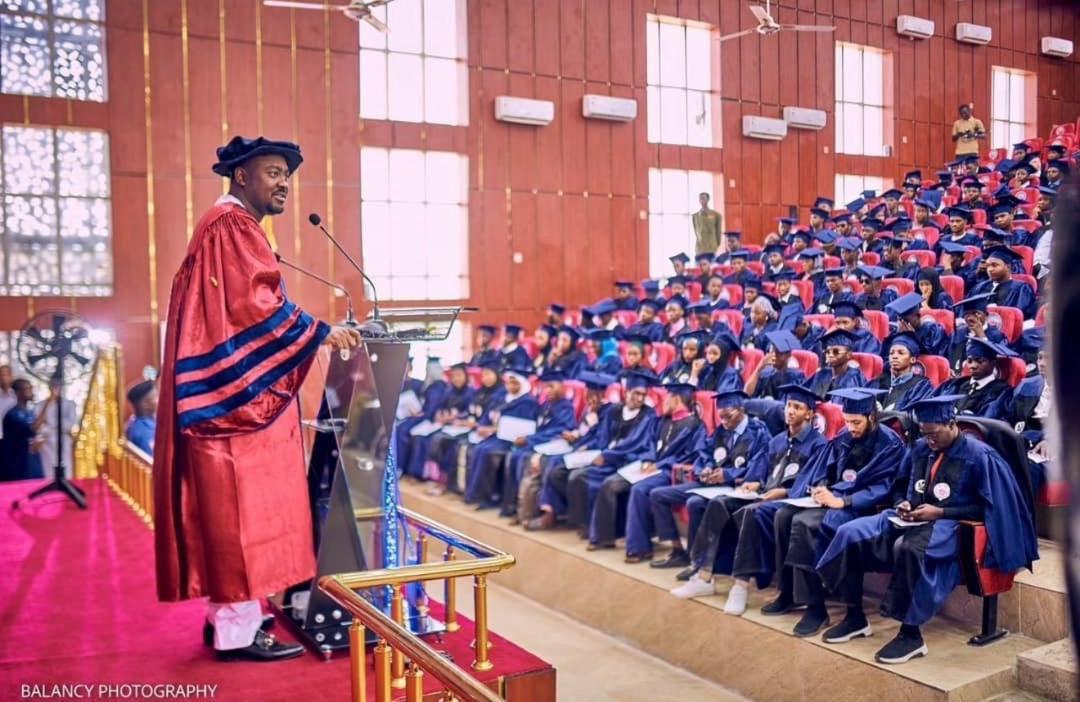
By Musa Abdullahi Sufi Abuja, Nigeria
In a continent where access to quality higher education remains one of the most pressing development challenges, the story of Adamu Abubakar Gwarzo stands out as an extraordinary example of youthful vision, institutional courage, and educational transformation.
At just 28 years old, Gwarzo took a step that few academics anywhere in the world attempt in a lifetime—he established a university. More remarkably, within roughly a decade he expanded that vision into a network of four international universities, creating a growing ecosystem of learning designed not only for Africa but for the global academic community.
Today, his institutions attract students from multiple continents, offer internationally relevant programs in cutting-edge disciplines, and serve as engines of community development through extensive philanthropic initiatives.
A University Founder at 28
In 2013, Gwarzo founded Maryam Abacha American University of Niger in Maradi, Niger Republic, an ambitious move that transformed the educational landscape of the region. The university became the first English-speaking and bilingual university in Niger, offering programs across sciences, social sciences, and liberal arts while attracting thousands of students from different countries.
Establishing such an institution at a young age required more than financial resources; it demanded intellectual vision and strategic foresight. Gwarzo envisioned a university system that would prepare African youth for the global knowledge economy while maintaining cultural relevance and affordability.
Over time, the institution grew into a major international academic hub with thousands of undergraduate and postgraduate students and strong links with global academic organizations.
Building a Continental University Network
Rather than stopping with a single institution, Gwarzo expanded his vision across borders. Within about a decade, he established three additional universities, creating what is now known as the MAAUN Group of Universities.
These institutions include:
• Maryam Abacha American University of Nigeria – Kano, Nigeria
• Franco-British International University – Kaduna, Nigeria
• Canadian University of Nigeria – Abuja, Nigeria
Together, they represent a new model of internationalized African higher education, offering programs in:
• Artificial Intelligence and emerging technologies
• Applied and basic sciences
• Medicine and health sciences
• Communication and journalism
• Leadership and governance studies
• International relations and diplomacy
• Entrepreneurship and business innovation plus
The Franco-British International University, for example, integrates French and British academic traditions, exposing students to diverse intellectual frameworks and preparing them for a globalized workforce.
These institutions are deliberately designed as international learning spaces, welcoming students from Africa, Europe, Asia, and the Middle East.
Education Beyond the Classroom
For Gwarzo, universities are not merely centers of academic instruction; they are vehicles for societal transformation.
Through the Adamu Abubakar Gwarzo Foundation, he has supported numerous community development initiatives across Nigeria and beyond.
Among the foundation’s impactful interventions include among many:
• Construction of over 100 boreholes to provide safe drinking water to rural communities in Nigeria, Niger Republic and more.
• Scholarships for thousands of underprivileged students pursuing degrees.
• Women empowerment initiatives providing business capital and training to female entrepreneurs.
• Renovation and support for health facilities and educational infrastructure etc.
These initiatives reflect a philosophy that education must extend beyond lecture halls to improve lives directly within communities.
In addition, his institutions regularly undertake outreach projects in health, environmental sustainability, youth leadership development, and digital skills training.
Advancing Research, Innovation and Global Engagement
Another defining feature of Gwarzo’s educational model is the integration of research and innovation.
His universities increasingly focus on areas critical to Africa’s future, including:
• Artificial Intelligence and digital transformation
• Biomedical and health sciences research
• Climate and environmental sustainability
• Media innovation and ethical journalism
• Leadership and governance studies etc
This approach reflects a broader ambition: positioning African universities as contributors not merely consumers of global knowledge.
It is therefore unsurprising that the institutions have gained increasing international recognition. MAAUN, for example, has been ranked among the leading universities in Niger Republic and Nigeria, reflecting its growing reputation for academic excellence and research productivity.
Recognition on the Global Stage
Gwarzo’s contributions to education and human capital development have drawn attention across the international academic community.
He has received several prestigious honors, including:
• Distinguished Scholarship and Edupreneurship recognition from Morgan State University.
• Honorary Fellowship from the International Association for Quality Assurance in Pre‑Tertiary and Higher Education.
• Awards recognizing his role in advancing African higher education and academic internationalization.
These recognitions highlight his emergence as one of Africa’s most influential education entrepreneurs.
A New Generation of African Edupreneurs
Across Africa, universities often emerge from state policy or decades of institutional evolution. What makes Gwarzo’s story remarkable is that it reflects a new generation of African edupreneurs—leaders who combine academic vision, entrepreneurship, and social commitment.
His journey from a young scholar founding a university at 28 to leading a multi-campus international university network represents a powerful message: that Africa’s educational transformation can also be driven by individual initiative, innovation, and courage.
The Larger Vision
Professor Adamu Abubakar Gwarzo’s work underscores a profound truth: Africa’s development depends fundamentally on knowledge institutions capable of producing leaders, innovators, and problem-solvers.
By building universities, funding community development, and championing international academic collaboration, he has demonstrated how education can become a strategic tool for social and economic transformation.
In an era when many African students still travel abroad in search of quality education, Gwarzo’s expanding academic ecosystem offers a compelling alternative world-class universities built in Africa, for Africa, and for the world.