

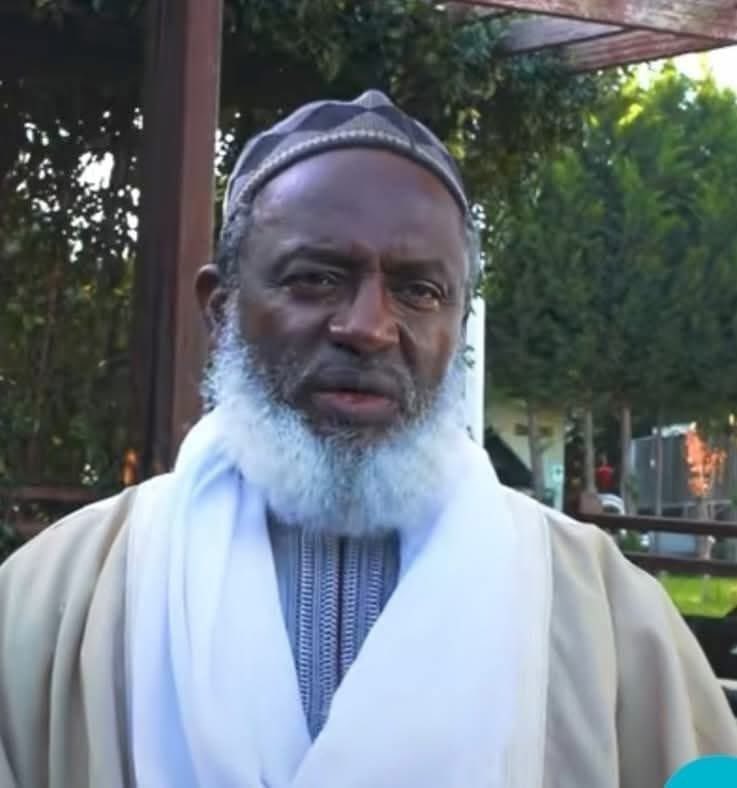
A political climate where national security continues to dominate discourse, one statement on social media has stirred fresh debate about the kind of leadership Nigeria needs to overcome its long-standing security challenges. Hon. Nuhu Sada, in a post on his X account, boldly declared: “If I were the President of Nigeria, I would appoint Sheikh Ahmad Gumi as my National Security Adviser.”
It is a provocative suggestion—one that forces Nigerians to rethink the nation’s security architecture, the limitations of current strategies, and the potential of hybrid approaches combining dialogue and force.
Hon. Sada’s argument is simple yet daring: Sheikh Ahmad Gumi, a retired military officer turned Islamic cleric and peace advocate, possesses a unique blend of experience, courage, and grassroots insight that could reposition Nigeria’s security strategy for the better. Whether Nigerians agree or not, the idea itself opens a window into a deeper conversation about what kind of leadership the country truly needs at this critical moment.
Sheikh Gumi is not just a religious figure. Before becoming a prominent voice in national discourse, he served in the Nigerian Army, giving him firsthand experience of the country’s security landscape from within the barracks. Hon. Sada emphasizes this dual identity: a man who has “consistently sacrificed his life defending our nation and promoting harmony.”
It is rare to find someone who understands both the psychology of conflict and the moral architecture of peace. Even fewer possess the courage to wade into the most dangerous terrains—physically and politically—to advocate for dialogue, negotiation, and reconciliation where many would rather deploy brute force.
While some of Gumi’s interventions have attracted criticism, particularly from those who see negotiation as a sign of weakness, his supporters—including Sada—argue that his efforts have often succeeded in opening communication channels at times when the state struggled to gain access. For a country where violence persists precisely because key actors remain faceless and unreachable, this ability is not trivial.
Hon. Sada’s proposition underscores a hard truth: Nigeria’s security crisis cannot be solved by military might alone. Decades of battles, billions of dollars in budgets, and countless deployments of troops have yielded limited results. Violence has mutated across regions—from Boko Haram in the Northeast to banditry in the Northwest and separatist tensions in the Southeast.
Sada’s post suggests that Nigeria may need to consider a paradigm shift. “Nigeria needs leaders who can stop the violence with both strategy and dialogue,” he writes.
This two-pronged approach aligns with what many global peace studies experts recommend: kinetic solutions must be complemented by non-kinetic engagements, addressing root causes rather than symptoms. A National Security Adviser with experience in both warfare and conflict mediation could, at least theoretically, bring fresh perspective to a system long dominated by conventional military logic.
Of course, the proposition is bound to spark controversy. Sheikh Gumi is one of the most talked-about public figures in Nigeria today. Admirers call him a bold peace ambassador; critics accuse him of being too close to non-state actors. Regardless of where one stands, Hon. Sada’s comment pushes a conversation that many policymakers avoid: who truly understands the insurgency and banditry crises at their core?
Nigeria’s security challenges thrive in terrain where the government has limited reach—physically and socially. Leaders like Gumi have been able to enter forests, sit with armed groups, and understand their grievances, motivations, and networks. To ignore such intelligence, Sada indirectly argues, is to continue fighting in the dark.
Others will counter that dialogue with criminals emboldens them. But the nation must confront an uncomfortable reality: force alone has not yielded victory. The country must be willing to debate unconventional ideas, even if uncomfortable.
Beyond the suggestion of appointing Gumi, Sada’s statement reflects broader frustration with the country’s security direction. His message can be read as a call to Nigerian leaders—particularly at the federal level—to be bolder, more imaginative, and more willing to break away from the status quo.
Security leadership in Nigeria has often leaned heavily on retired generals or intelligence chiefs whose worldview was shaped decades ago. Hon. Sada’s post proposes a different archetype: a peace-builder who understands war, a negotiator who knows the psychology of fighters, a cleric trusted by communities ignored by the state.
Whether or not one agrees that Gumi fits this description, the question remains: Should Nigeria explore a model of security management where dialogue is central, not secondary?
The brilliance of Hon. Sada’s statement lies not only in the appointment he proposes but also in the philosophy behind it. The Nigeria of today is complex, multi-layered, and unpredictable. Fixing it requires more than familiar faces and recycled tactics. It requires leaders who understand modern conflict, appreciate the necessity of negotiation, and can bridge the gap between the government and the governed.
In this sense, Gumi becomes a symbol—not just a person. A symbol of unorthodox thinking. A symbol of courage to engage with the difficult. A symbol of a leadership style that Nigeria has rarely experimented with.
Hon. Nuhu Sada’s opinion may be polarizing, but it is undeniably timely. At a moment when Nigerians crave solutions, not speeches, his post forces the nation to ask difficult questions: Are we ready to rethink our security strategy? Are we willing to consider unconventional leadership? And most importantly—are we prepared for peace built not only on strength but on wisdom?