

By: Zagazola Makama
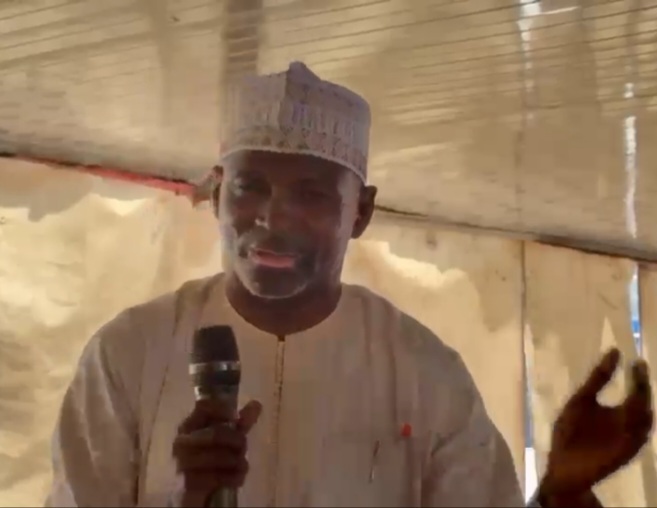
The Secretary of MACBAN Plateau State Chapter, Barister Salisu Isa Muhammed has identified politics, religion, land ownership disputes and criminality across ethnic communities as some of the factors sustaining the state’s prolonged security crisis.
Isa, who spoke in a mixture of Hausa and English, said the violence that began in 2001 had persisted for too long and required a clear understanding of its root causes before a lasting solution could be achieved.
“We are still in the Plateau crisis. What happened in 2001 should have been properly understood and resolved by now.”
According to him, understanding the causes of a problem is the first step toward resolving it.
“I have the belief that once there is a problem that is known, then the solution to the problem will also be known.”
He said the history of the crisis could not be separated from the intersection of politics and religion, particularly in Jos.
“At its core, what happened in Plateau State was connected to politics and religion.”
The leader said the crisis initially developed around political and religious tensions before gradually expanding into wider communal disputes involving land, identity and insecurity.
According to him, the politicisation and religious dimension of the conflict contributed to growing mistrust between Fulani and other ethnic communities in Plateau.
He, however, said the crisis should not be reduced to religion or ethnicity alone, identifying land ownership and acquisition as another major factor.
“What is bringing this crisis, the crisis in Plateau? One of the factors is the question of who owns the land in Plateau State. The issue of land acquisition is one of the problems triggering this crisis.”
The Fulani leader also identified criminality as another major factor sustaining the conflict, stressing that criminals exist across different communities and ethnic groups.
“The second factor is the issue of criminality. There are criminals among all the different groups. Among the Fulani, there are criminals.”
He said he remained proud of his Fulani identity but insisted that Fulani communities must distance themselves from individuals involved in criminal activities.
“I am a Fulani man, and I will remain a Fulani man, and I will be proud to be Fulani. All Fulani should distance themselves from the criminals among us.”
He, however, argued that criminal elements within different communities could benefit from the continuation of the conflict.
“There are criminals among the Fulani who want this crisis to continue. They benefit from the crisis in one way or another.”
The same, he said, applied to other ethnic groups and communities across Plateau State.
“Among all the other groups, tribes and sub-tribes in Plateau State, there are criminals who are benefiting from the crisis in one way or another.”
According to the leader, one of the biggest obstacles to resolving the crisis is the reluctance of communities to expose criminals within their own ranks.
He said when criminals from one community commit offences, innocent members of that same community often become reluctant to identify them and hand them over to the authorities.
“What is preventing the crisis from ending is that when criminals from the Fulani community commit crimes, Fulani who are not criminals among them may not have the courage to identify those criminals and hand them over to the relevant authorities.”
He said the same principle should apply to every community in the state.
According to him, suspects should be handed over to the appropriate authorities for investigation, prosecution and, where the evidence establishes guilt, conviction.
“They should be handed over to the relevant authorities for investigation, proper trial and conviction, so that it will serve as a deterrent to others.”
He said communities must therefore stop protecting criminals simply because they belong to their ethnic or religious group.
The leader stressed that collective blame could deepen the crisis, while identifying individual perpetrators and subjecting them to due process could help restore confidence among the communities.
He called for a broader understanding of the Plateau conflict that takes into account its political, religious, land and criminal dimensions, rather than attributing the violence to an entire ethnic or religious group.