

By:Abdullahi Inuwa
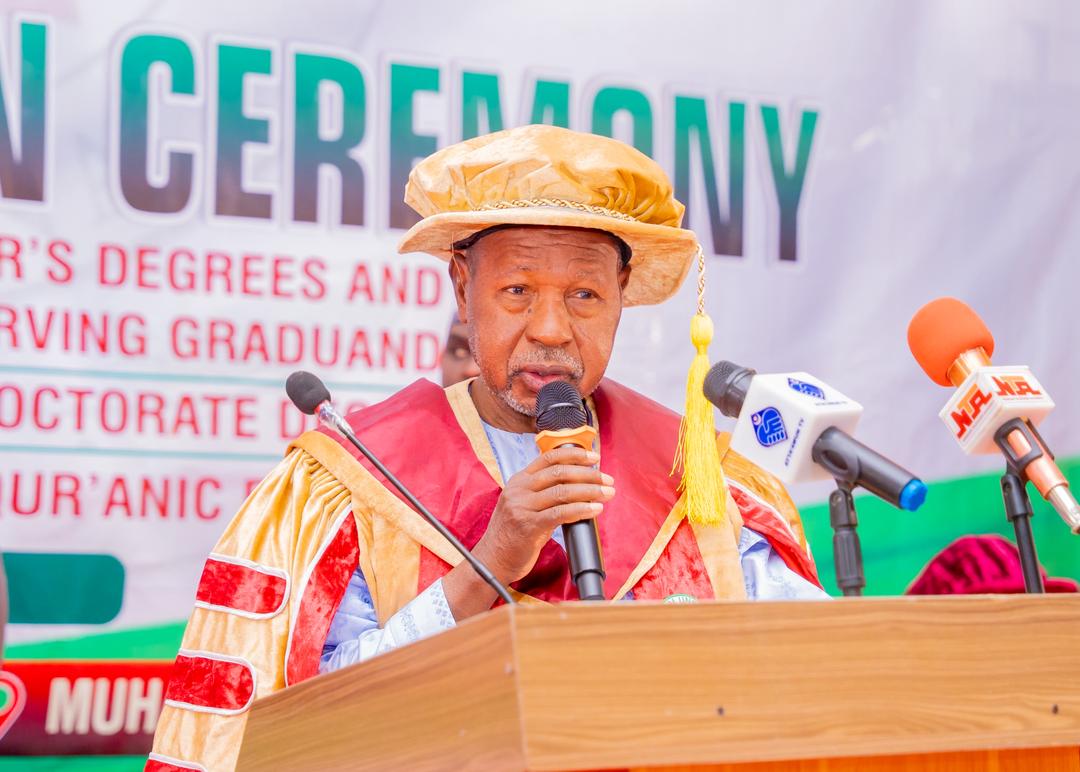
Few public figures in Nigeria’s contemporary political history have worn power with quiet consistency like Aminu Bello Masari. legislator, Speaker of the House of Representatives, two-term Governor of Katsina State, and now Chairman of the Tertiary Education Trust Fund (TETFund), Masari’s career reads less like a pursuit of titles and more like a long, deliberate march through the pillars of governance.
Born in Katsina, Masari’s political journey has always been rooted in institutional building rather than political flamboyance. Trained in law, he entered public life with a reputation for discipline, procedural order and an almost old-school belief in the authority of institutions. Those traits would later define his tenure in some of Nigeria’s most demanding public offices.
Masari rose to national prominence in 2003 when he was elected Speaker of the House of Representatives, becoming the first Speaker of the Fourth Republic to complete a full term without impeachment or removal. In a legislature notorious for turbulence, leadership tussles and executive-legislative friction, his four-year tenure stood out for stability. Under his gavel, the House asserted its independence while maintaining a working relationship with the executive, setting legislative benchmarks that many still reference today.
As Speaker, Masari projected firmness without theatrics. He insisted on due process, protected the sanctity of parliamentary rules and helped reposition the House as a serious arm of government. Colleagues and observers often recall his calm handling of heated debates and high-stakes national issues, qualities that earned him respect across party lines.
After his legislative service, Masari returned to Katsina politics, this time seeking executive responsibility. In 2015, he was elected Governor of Katsina State, a position he would hold for two consecutive terms until 2023. His governorship coincided with one of the most challenging periods in the state’s history, marked by escalating insecurity, banditry and economic pressures across the North-West.
As governor, Masari adopted a governance style anchored on prudence, gradual reforms and state resilience. He invested in infrastructure, education and healthcare while navigating the complex security realities confronting rural communities. His administration placed emphasis on institutional continuity, often choosing steady progress over dramatic but unsustainable interventions.
Education remained a central plank of his governance philosophy. Schools were rehabilitated, teacher recruitment and training expanded, and technical education received renewed attention. Though security challenges often overshadowed developmental gains, Masari consistently argued that education was the most sustainable weapon against poverty, extremism and social breakdown.
By the end of his second term, Masari had etched his name as one of Katsina’s longest-serving governors in the democratic era, leaving behind a legacy defined by administrative order, fiscal caution and an enduring belief in human capital development.
His post-governorship appointment as Chairman of the Tertiary Education Trust Fund was therefore seen by many as a natural progression rather than a political reward. TETFund, a critical institution responsible for funding public tertiary education in Nigeria, sits at the intersection of policy, finance and national development—terrain Masari is well acquainted with.
As Chairman, Masari brings to TETFund decades of experience across the legislative and executive arms of government. His understanding of policy formulation, budgetary discipline and institutional oversight positions him to influence how intervention funds are deployed to universities, polytechnics and colleges of education nationwide. Stakeholders see in him a chairman likely to prioritise accountability, impact and long-term value.
Those who know Masari often describe him as understated but firm, a leader more comfortable with systems than slogans. He rarely courts media attention, preferring results to rhetoric. Yet his influence has remained unmistakable, shaped by years of navigating Nigeria’s political complexities with restraint and resolve.
From presiding over lawmakers in Abuja to governing a frontline state and now steering educational development at the national level, Masari’s public service journey reflects continuity of purpose. It is the story of a man who has consistently occupied positions where institutions matter most—and who has treated those institutions with a sense of responsibility rather than entitlement.
In a political climate often driven by noise and short-term gains, Aminu Bello Masari’s career stands as a reminder that longevity in public service is built on discipline, credibility and an unwavering commitment to the public good. Whether in parliament, government house or the boardroom of Nigeria’s education trust fund, his imprint has been steady, deliberate and enduring.
Abdullahi Inuwa
Social Commentator
ainuwa303@gmail.com



mwkufjlsjzsgmlqsvrivroiipllgrp