

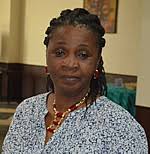
By Alkali Muhammad Musa, Maiduguri
Women in Nigeria have been urged to rise above long-standing cultural, structural and financial barriers and participate more actively in politics, as sustained female engagement remains crucial to deepening democracy and improving governance, Professor Patricia Ori Donli has said.
Prof. Donli, a lecturer at the University of Maiduguri and Director of the Gender Equality, Peace and Development Centre (GEPaDC), made the call during a paper presentation marking the conclusion of the 16 Days of Activism Against Violence on Women and Girls in Borno State.
Presenting a paper titled “Women’s Representation and Leadership in Politics in Borno State,” she said that nearly 25 years after Nigeria’s return to civil rule, the country’s democratic process has yet to deliver meaningful political inclusion for women.
According to her, although women contest elections and are elected at the federal, state and local government levels, their numbers and influence in decision-making remain worryingly low.
“Since Nigeria’s return to electoral democracy in 1999, the democratic process has been fraught with challenges, particularly with regard to women’s engagement in politics,” she said.
Prof. Donli described the outcome of the 2023 general elections as deeply disappointing, noting that women currently occupy only four of the 109 seats in the Senate and 17 of the 360 seats in the House of Representatives. She added that Nigeria has no female president, vice president or governor, while only eight women serve as deputy governors nationwide. Of the 45 ministers appointed, just seven are women.
“The data speaks for itself,” she stressed, adding that Nigeria ranks 178 out of 186 countries globally in women’s representation in national legislatures.
Focusing on Borno State, Prof. Donli said women’s political representation has remained largely stagnant since 1999, with little improvement in the State House of Assembly. She, however, highlighted the election of Inna Galadima as the first female local government chairperson in Jere LGA in 2023 as a modest but encouraging breakthrough.
She explained that no woman has ever been elected to the Senate from Borno State, while female presence in top administrative positions remains limited. Despite this, she urged women to see existing appointments and electoral gains as stepping stones for broader participation.
Prof. Donli attributed the low level of women’s participation largely to patriarchy and deeply entrenched cultural and religious norms, particularly in northern Nigeria, where leadership is often viewed as a male preserve.
“When people think of a leader, they think of a man. This patriarchal mindset discourages women from participating equally in politics,” she said.
She noted that female politicians are often treated as anomalies and subjected to public opposition from clerics and opinion leaders, with such biases amplified through social media, broadcast platforms and religious gatherings.
Other barriers identified include limited access to funding, political networks and mentorship, as well as the challenge of balancing public life with family responsibilities.
Prof. Donli also criticised Nigeria’s “late-night politics,” where key party decisions are taken at odd hours that effectively exclude many women. She further pointed to the increasing monetisation of politics, describing Nigeria’s political system as capital intensive and unfavourable to women, especially in the absence of influential sponsors.
She faulted weak internal party democracy, noting that candidates are often “selected rather than elected,” creating a cash-and-carry culture that sidelines competent women and discourages broader participation.
Prof. Donli lamented the poor implementation of international and regional frameworks such as the Convention on the Elimination of All Forms of Discrimination Against Women (CEDAW), the Beijing Platform for Action and the Sustainable Development Goals, warning that harmful social norms, gender-based violence and negative media stereotypes continue to undermine women’s political rights.
She also raised concerns over the growing trend of online abuse against women in politics, including threats of rape, death and physical violence, stressing that such intimidation further discourages women from seeking public office.
“These barriers, combined with party resistance to women’s leadership and winner-takes-all electoral systems, make it extremely difficult for women to compete on equal footing with men,” she said.
Prof. Donli concluded by calling on Nigerian women not to withdraw from politics but to organise, support one another and actively claim their space, stressing that Nigeria’s democracy cannot be truly representative until women are fully included in governance.