

By:Abdullahi Inuwa
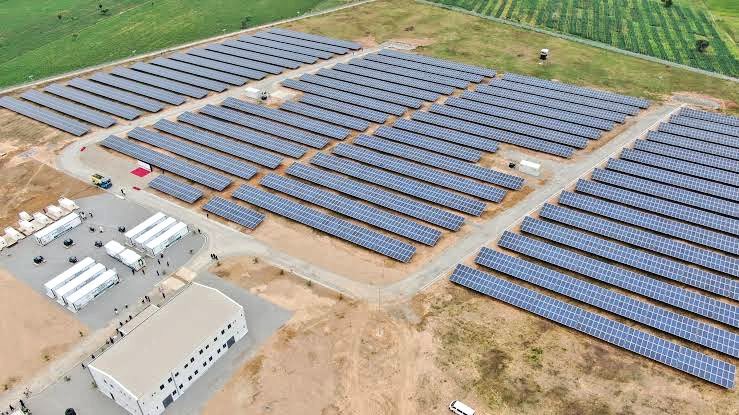
Former presidential aide, Bashir Ahmed, has raised fresh concerns over Nigeria’s chronic maintenance deficit, following revelations that the once-celebrated ₦5.6 billion solar hybrid power plant at Bayero University, Kano (BUK) has been dormant barely two years after its commissioning.
Reacting via his X (formerly Twitter) account, Bashir Ahmed said he had just read a Daily Trust report detailing how the 3.5-megawatt off-grid solar power plant, commissioned in September 2019 by then Vice President Prof. Yemi Osinbajo, stopped functioning by 2021 after developing faults.
The project, hailed at the time as Africa’s largest off-grid solar power plant, was designed to provide uninterrupted electricity to lecture halls, offices, student hostels and staff quarters—significantly reducing dependence on diesel generators and the national grid.
However, Ahmed noted that the shutdown of the facility and BUK’s return to diesel power painfully underscores “one of our biggest challenges in this part of the world — poor maintenance culture, especially when it comes to critical public infrastructure.”
He stressed that with proper maintenance, routine upgrades and effective management, the solar plant could have continued to serve the university efficiently, saving millions of naira annually while guaranteeing 24-hour reliable electricity for academic and residential activities.
“Without a strong maintenance framework, even the most ambitious and well-intentioned investments will inevitably fail,” Ahmed warned.
The development has reignited public debate over sustainability, accountability and post-project management of major government-backed infrastructure, particularly in the renewable energy sector—where Nigeria continues to invest heavily in search of lasting solutions to its power crisis.
As many observers argue, the BUK solar project may not be a failure of technology, but a stark reminder that infrastructure without maintenance is simply money waiting to be wasted.